

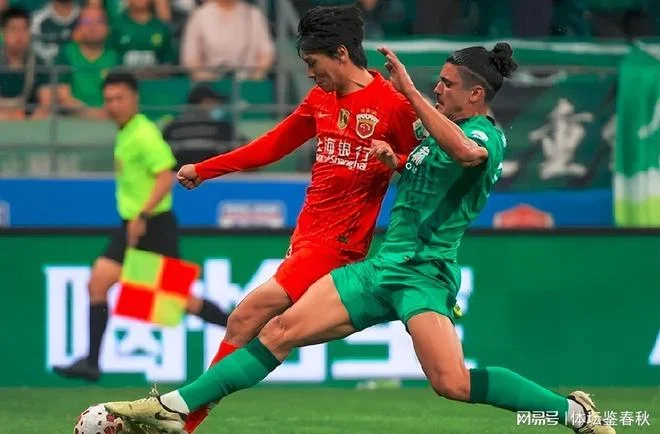
In the latest round of the Chinese Super League, Beijing Guoan fought to a 2-2 draw at home against Shanghai Port. Guoan had a real chance to claim all three points but saw three goals disallowed due to poor luck. Both goals they conceded came from individual errors, and the same player was at fault both times: Portuguese center-back Sergio Ramos (not to be confused with the famous Spanish defender). Those two mistakes made Ramos a scapegoat overnight, drawing harsh criticism from Beijing fans.

It’s undeniable that Ramos had a terrible performance against Shanghai Port. But the problem is that fans’ expectations for him far exceed what Guoan intended when they signed him. After all, the club spent only €100,000 (or possibly even got him on a free transfer) on the Portuguese defender. In today’s CSL, even many backup foreign players cost more than that. The club was basically “buying a lottery ticket”—so expecting him to play like a star every match is unrealistic. Last season, for instance, Cameroonian center-back N’Gadeu also made frequent mistakes.
Just four days before the Shanghai Port match, in a home game against Dalian Yingbo, Ramos was the best player on the pitch. Guoan went down to ten men in the first half, but in the 54th minute, Ramos scored a crucial header to open the scoring for his team, sparking a comeback. In that game, he was outstanding: multiple tackles and interceptions, and a perfect 100% success rate in aerial duels.
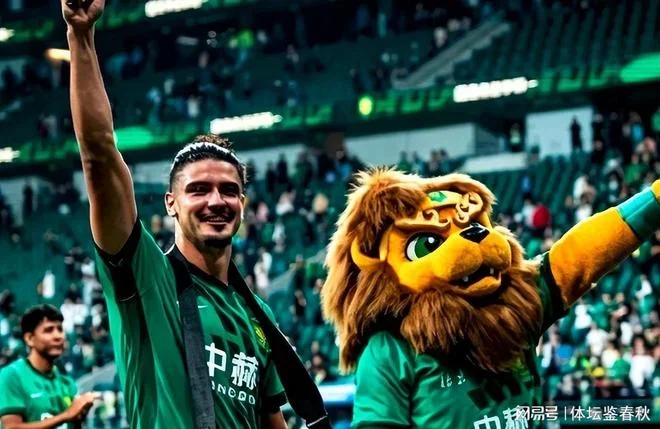
After that match, many fans hailed Ramos as a top-tier foreign center-back in the CSL. In less than a week, he went from “defensive pillar” to “team villain.” That’s the reality: Ramos has genuine ability, but his form is wildly inconsistent.
So, is Ramos worth it? Absolutely. Not because of his header against Dalian, but because the price tag sets expectations. A €100,000 signing is inherently a gamble, not the cornerstone of the defense.
For comparison, during Guoan’s peak years, the club spent nearly €80 million on Cédric Bakambu, who only scored 10 goals in his first season and often missed easy chances. That was a case of “big money for small returns.” Ramos is completely different. He represents Guoan’s new transfer strategy: focusing on baseline ability, physicality, and immediate contribution. From those angles, Ramos is far from a disappointment—he’s a bargain.
Thus, Ramos is a benchmark for Guoan’s current recruitment policy. You can’t expect to buy a luxury sports car on a used-car budget. Look at Shanghai Port’s Leonardo and Vital, or Shenhua’s foreign investments over the years—they are willing to splash big money in key positions. Guoan’s real problem isn’t just Ramos’s inconsistency, but the rash of injuries in the midfield and defense.
It’s worth noting that while Ramos’s performances are up and down, his attitude is spot-on. His roar after scoring against Dalian, his frustration after errors against Shanghai Port—everyone can see he genuinely takes responsibility. Beijing fans appreciate that more than anything.
Why do more and more fans now like Conte? Not just because he’s a workhorse who contributes both offensively and defensively, but because he gives 110% every match. Why were fans unhappy with the players in the same position last season? Because they didn’t put in the effort. So let’s stop blaming Ramos. For €100,000, no one is a demigod. At that price, what more can you ask for?
